

How office cleaning contracts work: daily service vs periodic deep cleans
By Janice · Updated 2026-07-07
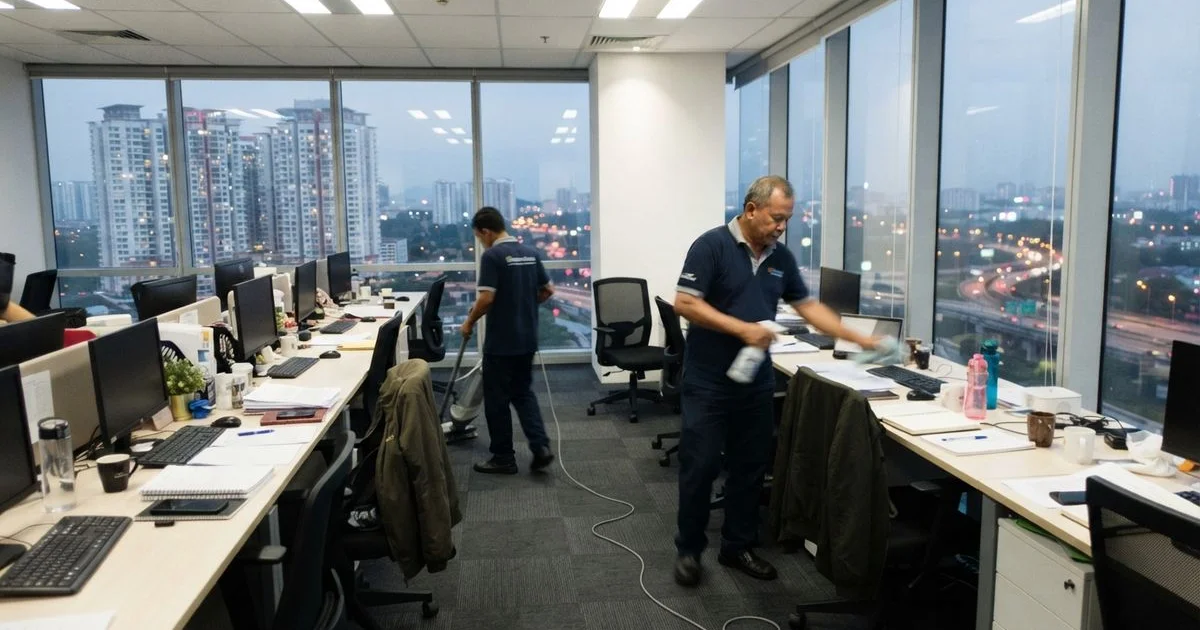
Commercial cleaning contracts read differently from a home cleaning quote because they’re built around two separate layers of work: what happens every day, and what happens a few times a year. Understanding that split makes it much easier to read a quote and know what you’re actually paying for.
The daily or nightly layer
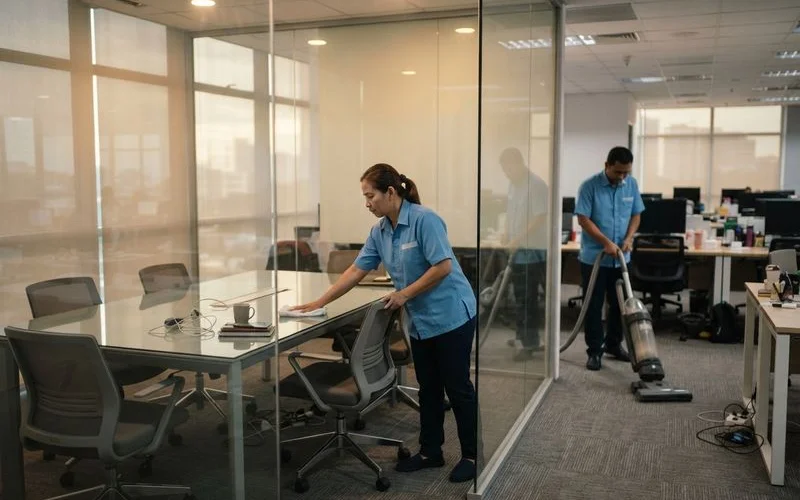
This is the recurring, high-frequency work: rubbish removal, vacuuming and mopping, restroom restocking and sanitising, and wiping down desks and shared surfaces. Frequency depends on foot traffic. A busy office with daily visitors typically needs daily servicing, while a smaller or lower-traffic office can often get by on three visits a week without a noticeable drop in cleanliness between sessions.
The periodic deep-work layer
Carpet shampooing, full glass and window panel cleaning, floor polishing or scrubbing (particularly for vinyl and marble), and aircon vent dusting fall into this category. These are usually scheduled quarterly or twice a year and quoted as a separate line item rather than folded into the daily rate, since the equipment and time required are quite different from routine servicing.
| Layer | Typical tasks | Frequency | Usually quoted |
|---|---|---|---|
| Daily/nightly servicing | Bins, floors, restrooms, desk wipe-down | Daily to 3x/week | As part of the monthly contract |
| Periodic deep work | Carpet shampoo, glass, floor polish, vent dusting | Quarterly to twice a year | Separately, on top of the base contract |
| One-off jobs | Post-renovation or move-in/out cleans | As needed | Separately, project-based quote |
What to check before signing
A written scope of work should list, room by room or floor by floor, exactly which tasks happen on which schedule. Beyond that, a few practical questions save trouble later:
- Are staff insured, and does the company supervise its own crews rather than subcontracting without oversight?
- Are consumables like toilet paper, hand soap, and bin liners included, or billed separately?
- What’s the notice period if you need to change the schedule, and how is after-hours building access and security sign-in handled?
- What happens if a task gets missed, redo within a set window, or a credit against the next invoice?
Companies covering commercial and office cleaning in Petaling Jaya generally structure quotes around these same questions, so having your own checklist ready speeds up comparing providers.
Reading the fine print on consistency
The single factor that separates a contract that works long-term from one that gets cancelled within a few months isn’t the cleaning itself, it’s whether the same team shows up reliably. Rotating staff tend to miss the same corners repeatedly because nobody builds familiarity with the space. Ask specifically whether the provider assigns a fixed crew to your account, and how they handle staff turnover or sick days without leaving you short-handed on a scheduled visit.
Pricing structure to expect
Most commercial quotes price by square footage and visit frequency, then add periodic deep work as a separate estimate once they’ve walked the space. Be cautious of a quote that skips the site visit entirely, since accurate pricing for an office depends on layout, restroom count, and flooring type as much as raw square footage. A short walk-through before signing also gives you a chance to flag anything the standard scope might miss, like a pantry, server room, or stairwell shared with another tenant.
Contract length and renewal terms
Most commercial cleaning contracts run on a rolling monthly basis or a fixed term of six to twelve months, with an agreed notice period, commonly 30 days, for either side to end the arrangement. A shorter initial term is worth negotiating if you’re trying a new provider for the first time, since it gives you an exit point to reassess before committing to a longer arrangement. Ask specifically what happens at renewal: whether pricing is locked for the term or subject to review, and whether the scope of work can be adjusted if your office layout or headcount changes partway through.
Handling multi-tenant buildings and shared spaces
Offices in shared buildings often have cleaning responsibilities split between the tenant and the building management, with the building typically covering common areas like lobbies and stairwells while your contract covers your own unit. Get clarity on where that line sits before signing, particularly for shared pantries, meeting rooms booked across departments, or a reception area used by multiple tenants, since these are common points of confusion when something gets missed and each side assumes the other was responsible.
If you’re also arranging cleaning for your own home alongside the office contract, our guide on what to expect during a home cleaning visit covers the residential side of the process.
For the scoring behind our provider rankings, see the methodology page, and browse other categories from the home page if your building needs more than office cleaning alone.
FAQ
- What's the difference between daily servicing and a deep clean in an office contract?
- Daily or nightly servicing covers bins, vacuuming, mopping, and restroom restocking, the upkeep tasks that need doing every working day. Periodic deep work, like carpet shampooing, glass cleaning, or floor polishing, is scheduled quarterly or a few times a year and usually quoted separately.
- Should consumables like toilet paper and hand soap be included in the contract?
- This varies by provider, so don't assume. Some quotes bundle consumables into the monthly fee, others bill them separately. Ask for this to be written into the scope of work so there's no dispute later.
- Do we need the same cleaning team every visit?
- It's worth asking for. Reviewers consistently rate consistency, the same crew learning your office's layout and quirks, higher than any single impressive one-off clean, since a rotating team tends to miss the same spots repeatedly.
- How do we handle a missed task or a complaint?
- A solid contract spells out a reporting process and a redo window, usually within 24 to 48 hours, at no extra charge. Ask about this before signing rather than discovering the policy only when something goes wrong.