

Cleaning chemicals and kids or pets at home: what's actually safe
By Janice · Updated 2026-06-13
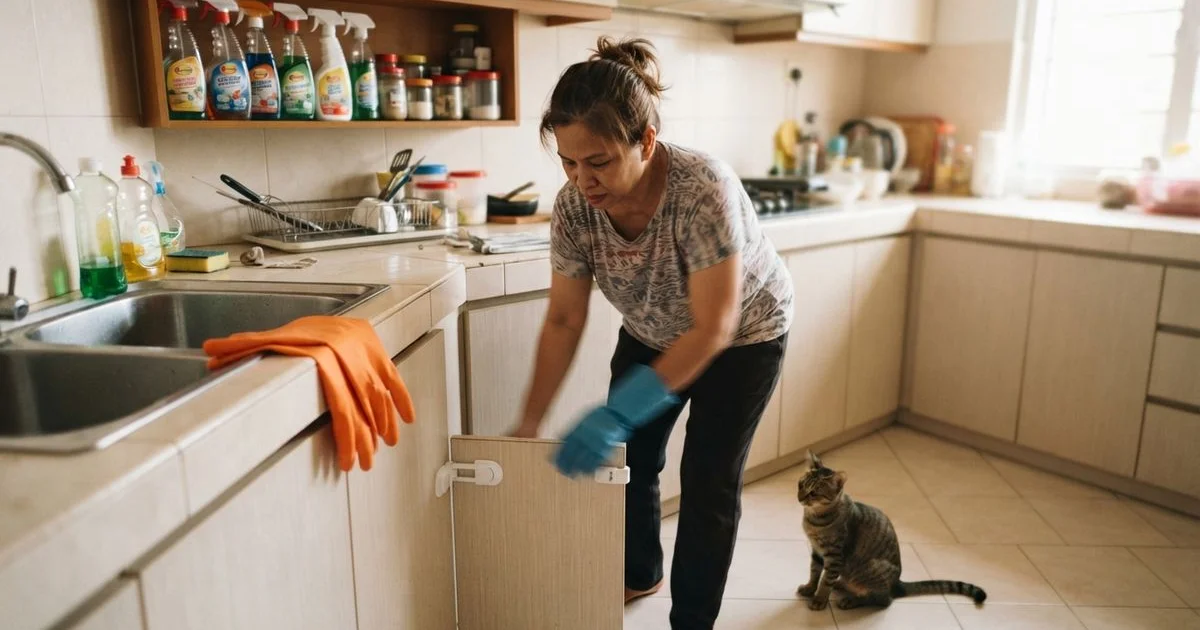
Most households don’t think twice about the cleaning products under the sink until a curious toddler or a pet gets into them. A few practical habits, and knowing which products actually carry risk, cover most of what matters here. This is general information, not medical advice.
The products that carry real risk
Bleach, ammonia-based cleaners, and drain unclogging products sit at the higher-risk end, both from ingestion and from fumes in an enclosed space. The most dangerous mistake is mixing bleach and ammonia-based products together, even accidentally, since the combination produces toxic fumes. Beyond these, most all-purpose cleaners and dish soaps are lower risk but still worth keeping well out of reach.
Storage habits that actually matter
| Habit | Why it helps |
|---|---|
| Store in a locked or high cabinet | Removes easy access for young kids and curious pets |
| Keep products in original containers | Labels carry emergency information if exposure happens |
| Never transfer to food or drink bottles | One of the most common causes of accidental ingestion |
| Close and store immediately after use | Reduces the window where a product is left within reach |
| Keep fumes-heavy products in ventilated areas only | Bleach and strong disinfectants need airflow during use |
Where eco-friendly cleaning genuinely helps
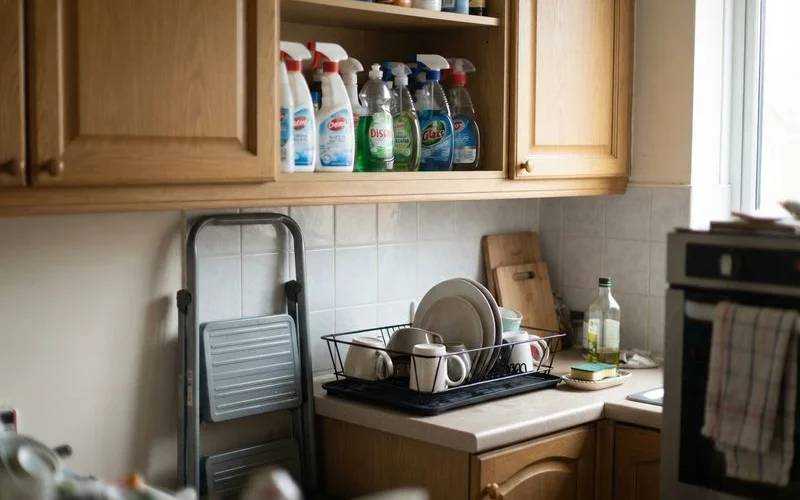
Eco-friendly cleaning products typically use gentler surfactants and avoid some of the harsher chemicals found in standard formulations, which matters most for households with crawling babies who put hands and objects in their mouths, pets that groom themselves after walking across cleaned floors, or family members with skin or respiratory sensitivities. That said, “eco-friendly” isn’t a guaranteed label, so checking the actual ingredient list matters more than the marketing on the front of the bottle.
Providers under our eco-friendly and green cleaning category in Petaling Jaya typically use plant-based or lower-toxicity products as standard, which is worth asking about directly if this is a priority for your household, rather than assuming every cleaning company defaults to it. If cost is the only thing holding you back, our guide on whether eco-friendly cleaning is worth the extra cost breaks down the real price difference.
During a professional cleaning visit
If you’re having a cleaning company in and have young kids or pets at home, it’s worth telling them upfront. Most crews are happy to keep pets and kids in a separate room while stronger products are in use, ventilate properly, and let surfaces dry and air out before anyone touches them again. Asking what products they use, and requesting eco-friendly alternatives if that matters to you, is a normal and reasonable question to ask before booking.
If exposure happens
Contact a doctor, vet, or poison control immediately, with the product name and label on hand so they have accurate information to work from. Don’t wait to see if symptoms develop, and don’t attempt home remedies like inducing vomiting unless a medical professional specifically tells you to.
Most cleaning-related incidents at home come down to storage and habit rather than which specific brand of product is used. Getting the storage right, and being deliberate about which products are used around kids and pets, covers most of the real risk.
Reading labels beyond the marketing
Ingredient lists on cleaning products can be dense, but a few red flags are worth scanning for regardless of how a product is marketed: warnings about ventilation requirements, instructions not to mix with other products, or any label calling for gloves during use. These are practical signals about the product’s strength, more useful than whether the packaging says “natural” or “eco” on the front. If a product doesn’t list ingredients clearly at all, that’s itself worth treating with a bit more caution around kids and pets than a product that’s upfront about what it contains.
Pets specifically
Pets are often more exposed to floor-level cleaning residue than people realise, since they walk across freshly mopped floors and then groom themselves, effectively ingesting whatever’s left behind on their paws. Letting floors fully dry before pets are allowed back into a room, and choosing pet-safe formulations for floor cleaning specifically, reduces this exposure meaningfully. If a pet shows unusual symptoms, excessive drooling, vomiting, or lethargy, after a cleaning session, mention the specific products used when you contact a vet, since this speeds up figuring out what’s going on.
See our methodology page for how eco-friendly providers are scored, and the home page for other cleaning categories.
FAQ
- Which common cleaning products are riskiest around kids and pets?
- Bleach, ammonia-based cleaners, and drain unclogging products carry the highest risk if ingested or if fumes build up in a poorly ventilated space. Never mix bleach and ammonia products together, since the combination produces dangerous fumes. This is general information, not medical advice.
- Are eco-friendly cleaning products actually safer, or is that just marketing?
- Genuine eco-friendly products generally use gentler surfactants and skip some of the harsher chemicals, which can matter for households with crawling babies, pets that lick surfaces, or family members with sensitivities. Check labels rather than assuming, since not every product marketed as green is meaningfully different.
- How should cleaning products be stored in a home with young kids or pets?
- Keep them in a locked or high cabinet, in their original containers with labels intact, and never transferred into food or drink bottles, which is one of the most common causes of accidental ingestion.
- What should I do if a pet or child is exposed to a cleaning product?
- Contact a doctor, vet, or poison control immediately with the product name and label in hand. Don't wait to see if symptoms appear, and don't induce vomiting unless specifically instructed to by a medical professional.