

Mould and damp after flooding: cleaning your home safely
By Janice · Updated 2026-06-16
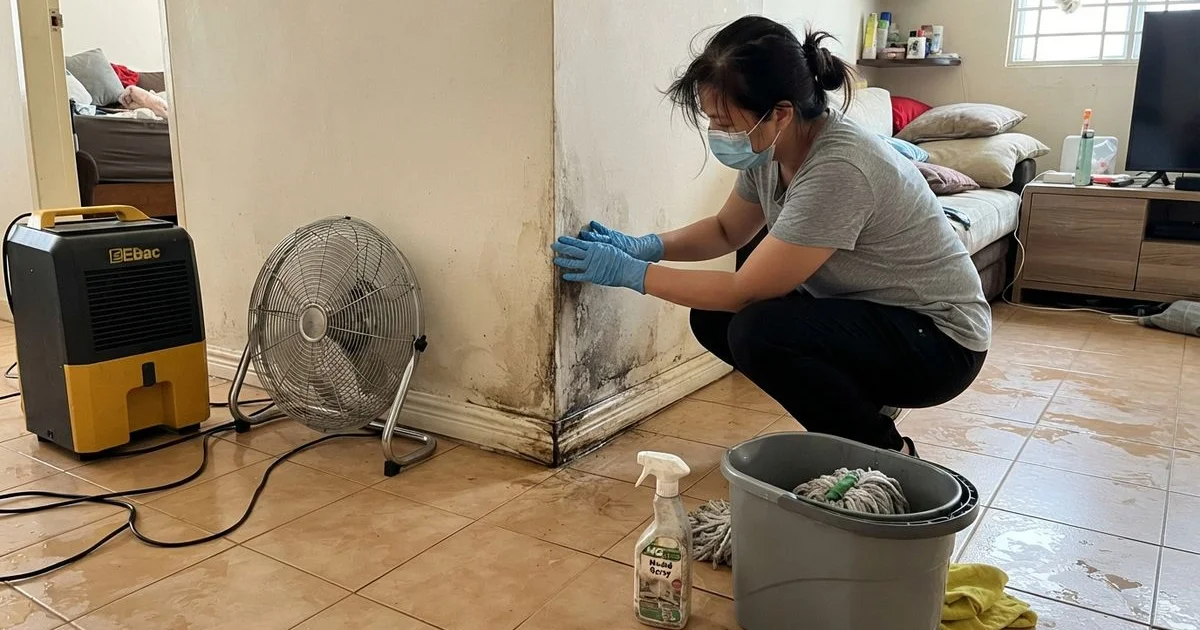
Mould after flooding or a persistent leak isn’t just a cosmetic problem, it develops fast and spreads into places that are hard to check without pulling up flooring or looking behind furniture. Acting within the first day or two after water exposure makes the biggest difference. This is general information, not medical advice.
Why the first 48 hours matter most
Mould spores are present in nearly every environment, and they only need moisture and time to establish themselves. In a humid climate, that window can be as short as a day or two after flooding or a leak. This is why the immediate priority after any water intrusion is drying the space out, not waiting to see if it becomes a problem.
What’s most at risk
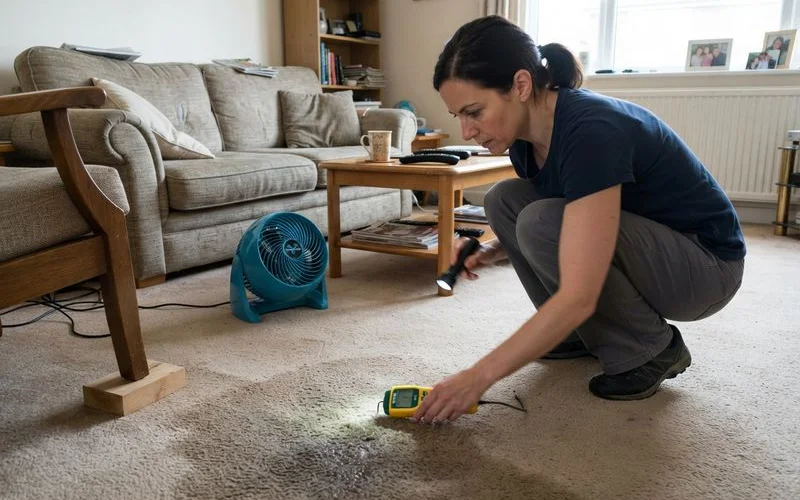
Carpets, rugs, mattresses, and upholstered furniture absorb and hold moisture far longer than hard flooring or walls, which makes them the first places mould tends to appear after a flood. Cabinets and skirting boards near affected areas are also worth checking closely, since moisture can wick into materials that don’t look wet on the surface.
| Item or area | Risk level after water exposure | What helps |
|---|---|---|
| Carpets and rugs | High | Fast drying, professional extraction if soaked through |
| Upholstered furniture, mattresses | High | Raise off wet floors, dry thoroughly before reuse |
| Hard flooring (tile, vinyl) | Lower | Wipe dry, ventilate underneath if there’s a gap |
| Walls near the water source | Moderate to high | Check inside cabinets and behind furniture pushed against them |
| Aircon units affected by flooding | Moderate | Have coils and ducts checked before running again |
What’s reasonable to handle yourself
Small, surface-level mould on hard, non-porous surfaces, tile grout, hard flooring, painted walls, can often be cleaned with basic precautions: gloves, a well-ventilated room, and care not to disturb the area more than necessary, which can release spores into the air. Wipe rather than scrub aggressively where possible, and dispose of cleaning materials rather than reusing them elsewhere in the home.
When to call in a professional
Larger mould patches, mould that’s returned after a previous cleaning attempt, or mould suspected inside walls, under flooring, or in ductwork are better handled by a professional. Providers experienced with carpet and upholstery cleaning in Petaling Jaya often handle mould treatment on soft furnishings as part of their post-flood service, using equipment and drying methods that go beyond what’s practical at home. If anyone in the household has asthma, allergies, or another respiratory condition, it’s worth erring toward professional help sooner rather than attempting a DIY clean on anything beyond a small, contained patch. If your carpets and rugs escaped mould but still need a proper deep clean after the flood, our DIY vs professional carpet cleaning guide breaks down when a rental steam cleaner is enough.
Preventing a repeat
Once the immediate cleanup is done, check that the original cause, a leak, poor drainage, or a gap that let water in, has actually been fixed, not just the visible damage. Persistent humidity in a unit, even without another flood, can bring mould back if the underlying moisture source isn’t addressed.
Signs a mould problem is bigger than it looks
A musty smell that persists after visible surfaces have been cleaned is often a sign that mould has spread somewhere you can’t easily see, inside a wall cavity, under flooring, or within an aircon duct. Discoloration that keeps returning to the same spot after repeated cleaning is another signal that the underlying moisture source hasn’t actually been resolved, rather than a sign the cleaning method isn’t working. In either case, treating the symptom repeatedly without addressing what’s causing the ongoing dampness tends to be a losing battle, and it’s worth bringing in someone who can assess the source directly rather than continuing to clean the same visible patch.
Humidity control as ongoing prevention
Petaling Jaya’s climate keeps indoor humidity elevated for much of the year, which means mould prevention isn’t a one-time task after a flood, it’s an ongoing consideration for any home. Using a dehumidifier in consistently damp areas, ensuring bathrooms and kitchens have working extractor fans, and checking that furniture isn’t pushed flush against exterior walls (which restricts airflow and traps moisture) all help reduce the conditions mould needs to take hold again after an initial cleanup.
See our methodology page for how these providers are ranked, and the home page for the full range of cleaning categories.
FAQ
- How quickly can mould develop after flooding or a water leak?
- Mould can start growing within 24 to 48 hours in damp conditions, particularly in humid climates, so the drying-out window right after a flood or leak is the most important period for preventing it from taking hold.
- Is it safe to clean mould myself?
- Small, surface-level mould patches on hard surfaces can often be handled with basic precautions, gloves, ventilation, and care not to spread spores. Larger areas, mould inside walls or under flooring, or mould affecting anyone with respiratory issues, are better left to professionals. This is general information, not medical advice.
- What household items are most at risk after a flood?
- Carpets, rugs, upholstered furniture, and mattresses absorb moisture and are prone to developing mould if they aren't dried and treated quickly, often within the first day or two after water exposure.
- Does opening windows help or make it worse?
- It depends on outdoor humidity. On a dry day, ventilation helps a lot. On a very humid or rainy day, it can slow drying instead, so checking conditions before deciding is worth the extra minute.
Related on this site
- Browse carpet & upholstery cleaning providers
- DIY vs professional carpet and upholstery cleaning: when hiring pays off
- Hoarding and biohazard cleanup in Petaling Jaya: what families need to know
- Dust and air quality after renovation: what to check before moving back in
- Cleaning chemicals and kids or pets at home: what's actually safe
- All guides →